

Home › Specialties ›OCD Therapy
OCD THERAPY · HOUSTON & TELEHEALTH
You want to stop, but you can't. The doubt just won't go away.
You've been fighting your own mind for too long. You're exhausted.
Specialized OCD therapy in Houston and across Texas. I'm a clinical psychologist and one of the few providers in Houston offering both ERP and I-CBT, two distinct evidence-based approaches that work differently, which means if one hasn't worked for you, the other may.
OCD specialist
ERP & I-CBT trained
One of few Houston providers
offering both ERP and I-CBT
Telehealth across Texas & NY
+ 40 PsyPact states
Free 15-min consult
No commitment required
THIS MIGHT FEEL FAMILIAR
The thoughts come back. No matter what you do, the doubt doesn't resolve.
OCD is not about being neat or organized. It's about a cycle of intrusive thoughts and compulsions that feels impossible to break. Most people with OCD know their fears don't make sense. Knowing isn't enough to stop the cycle.
Intrusive thoughts that feel disturbing, wrong, or completely out of character, and that keep coming back no matter how hard you try to push them away
Compulsions that bring temporary relief - checking, washing, seeking reassurance, mental reviewing - but never fully resolve the doubt
A doubt that won't settle, a sense that something might be wrong, might have happened, might be true, even when you know logically it isn't
Significant time lost to rituals, mental reviewing, or reassurance-seeking, sometimes hours each day
Shame or confusion about the content of the thoughts, especially when they involve things that feel contrary to your values or who you are
A sense that the compulsions are expanding over time, taking up more space, requiring more effort, and providing less relief
OCD is one of the most misunderstood mental health conditions. It is also one of the most treatable, when the right approach is used.
OCD isn't about the thoughts. It's about what you do with them.
WHAT'S ACTUALLY HAPPENING
Intrusive thoughts are universal. Every person has unwanted, strange, or disturbing thoughts occasionally. What makes OCD different is not the presence of these thoughts but the meaning the brain assigns to them and the compulsive response that follows.
OCD targets what matters most to the person. The doubts feel compelling precisely because they touch on something you care deeply about or fear about yourself. A devoted parent tormented by thoughts of harming their child. A careful person paralyzed by doubt about whether they caused an accident. A deeply religious person experiencing blasphemous intrusions. The content is not random. OCD uses your values against you.
Compulsions feel like the solution. They provide temporary relief, which is exactly why they maintain the cycle. Every compulsion teaches the brain that the doubt was real enough to require a response. The doubt returns, often stronger. Over time, compulsions expand and relief decreases.
Why standard anxiety approaches often fall short for OCD: Typical CBT for anxiety works by challenging the content of anxious thoughts. OCD doubt is different. It finds a workaround for almost any rational counter-argument. Challenge the thought and the doubt shifts its ground. Effective OCD treatment addresses the nature of the doubt itself, not just its content.
COMMON OCD PRESENTATIONS
OCD can look very different from person to person.
Contamination OCD
Fear of contamination from germs, chemicals, illness, or moral impurity. Compulsions often involve washing, cleaning, or avoidance of perceived contaminants.
Harm OCD
Intrusive thoughts about accidentally or intentionally harming oneself or others. Often accompanied by checking, seeking reassurance, or avoidance of objects or situations that trigger the doubt.
Relationship OCD
Persistent doubt about the rightness of a relationship, whether feelings are genuine, or whether a partner is truly right for you. Compulsions often include mental reviewing and reassurance-seeking.
Scrupulosity
Obsessive fear of sinning, being morally impure, or offending God. Often involves excessive praying, confession, or religious ritual beyond what feels spiritually meaningful.
Just Right / Symmetry
An intense sense that something is not quite right or incomplete, not always tied to a specific feared outcome. Compulsions involve arranging, ordering, or repeating until the feeling resolves.
Pure O
OCD where the compulsions are primarily mental rather than visible: ruminating, mentally reviewing, neutralizing, praying, or seeking internal reassurance. Despite the name, Pure O always involves compulsions, they just happen inside the mind.
Sexuality OCD
Intrusive doubts about one's sexual orientation or identity, or unwanted thoughts about being attracted to people one would never want to be attracted to, including children, family members, or others. These thoughts are ego-dystonic — deeply contrary to who the person actually is and what they actually want — and the distress they cause is itself evidence of that. Compulsions typically involve mental reviewing, testing, or seeking reassurance.
OCD can present in many other ways beyond these common subtypes. If you recognize the pattern of intrusive doubt and compulsive response, regardless of the specific content, it is worth speaking with a professional about whether OCD may be part of what you are experiencing.
The intrusive thoughts and compulsions vary widely depending on the person and their values. These are some of the most common presentations.

TWO APPROACHES TO OCD TREATMENT
Two evidence-based approaches. One of the few practices offering both.
Some people who have tried ERP and not found it helpful find I-CBT works better for them. I offer both and will work with you to determine which approach fits your presentation and goals.
Effective OCD treatment requires a specialized approach. I offer both ERP and I-CBT, the two approaches with the strongest evidence specifically for OCD. Which one we use depends on your presentation, your history with treatment, and what fits best for you. I also draw on elements of other evidence-based approaches, including ACT and rumination-stopping techniques, when they fit the person and the presentation.
WHAT TO EXPECT
Treatment that's structured, specific, and built around your OCD.
OCD treatment is not one-size-fits-all. The approach we use, the targets we set, and the pace we move at all depend on your specific presentation. While I specialize in anxiety and OCD, most people come with more than one thing on their mind. We can focus on whatever feels most important to you, and will talk through your options for each session together.
Understanding your OCD
The first one or two sessions focus on building a clear picture: the nature of your obsessions and compulsions, how long you've been experiencing them, what you've already tried, and what your goals are.
Choosing the right approach
Based on your presentation and history, we'll determine whether ERP, I-CBT, or a combination is the best fit. If you've tried OCD treatment before, what worked and what didn't is important information.
Active treatment and real-world application
Sessions are active and skills-focused. You'll develop tools to use between sessions so that when OCD shows up in real life you have something to draw on, not just in the room.
Sessions are typically once a week or every two weeks. Some people choose to meet more frequently, particularly early in treatment or during a difficult period. Many people make meaningful progress in 12 to 20 sessions, though OCD treatment length varies considerably depending on the severity and duration of symptoms and how much work happens between sessions. Some presentations take longer. What matters most is that we have clear goals, a clear plan, and the ability to adjust together as treatment progresses.
I also work with younger patients
OCD in children and teens often goes unrecognized.
In younger children, OCD frequently shows up as rigid routines, reassurance-seeking, and meltdowns when rituals are interrupted. In teens it can look like perfectionism, avoidance, or withdrawal. I work with both age groups using ERP and I-CBT adapted to their developmental stage — the same evidence-based approaches used with adults. For children or teens who won't participate, or when accommodation is playing a significant role, the SPACE approach may be a better option. See Childhood anxiety & OCD link for SPACE details.
OUTCOMES
What life can look like when OCD isn't running things.
The goal isn't the elimination of intrusive thoughts. It's a life where the thoughts don't require a response.
Intrusive thoughts that come and go without triggering a spiral of doubt and compulsion
Hours reclaimed from rituals, mental reviewing, and reassurance-seeking
A different relationship to doubt, one where you trust your own senses rather than deferring to OCD's story
Doing things you had been avoiding because of what OCD told you might happen
Less shame about the content of your thoughts, and a clearer understanding of what OCD is and isn't
A sense of your life expanding again, rather than contracting around the things OCD has made feel unsafe
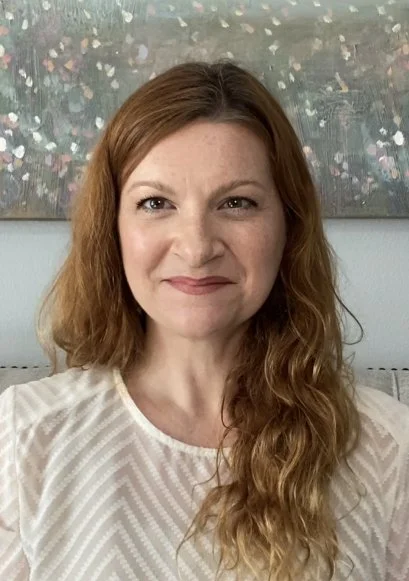
Dr. Ehrin Weiss
Clinical Psychologist
WHY DR. WEISS
Specialized OCD training. Multiple approaches available.
I'm a clinical psychologist specializing in OCD and anxiety. I'm one of the few providers in Houston offering both ERP and I-CBT, which means the approach we use is matched to you rather than determined by what a single-method practice can offer.
I work with adults, teens, and children across Texas, New York, and 40+ PsyPact states. I'm also the author of Anxiety Relief Book for Kids.
Free guide
Understanding Anxiety & OCD
A practical guide covering what anxiety and OCD actually are, why they persist, and what evidence-based treatment involves, including the difference between ERP and I-CBT.
- ✓Is this anxiety, OCD, or both?
- ✓How OCD works and why compulsions maintain it
- ✓The role of obsessive doubt and why it targets what matters most
- ✓ERP and I-CBT: how they work and how they differ
- ✓What to look for in an OCD therapist
RELATED SPECIALTIES
OCD rarely travels alone.
Many people dealing with OCD are also navigating one of these.
Specialty
Anxiety treatment
OCD and anxiety disorders frequently co-occur. CBT for GAD, social anxiety, panic, phobias, and health anxiety.
Learn more →Specialty
Burnout & life transitions
When OCD is compounded by exhaustion, a major life change, or a sense that something needs to shift.
Learn more →Specialty
Childhood anxiety & OCD
For parents whose child is struggling with OCD or anxiety. CBT and the SPACE approach available.
Learn more →WHERE WE CAN WORK TOGETHER
In-person and telehealth options
In-person sessions Houston
In-person sessions are available at my Houston office. View current availability and schedule directly online →
Telehealth therapy 40+ States
Secure video sessions throughout Texas, New York, and all PsyPact states. View current availability and schedule directly online →
Current as of March 2026. Confirm at psypact.gov.
FREQUENTLY ASKED QUESTIONS
Common questions about OCD therapy
-
The hallmarks of OCD are intrusive, unwanted thoughts that cause significant distress, and compulsive behaviors or mental acts performed in response to reduce that distress. What distinguishes OCD from general anxiety is the quality of the doubt: a nagging, unresolvable sense that something might be wrong, even when you know logically it isn't, and a compulsion cycle that provides only temporary relief. OCD also tends to target what matters most to the person, which is part of why the thoughts feel so disturbing. A proper assessment is the most reliable way to know whether OCD is part of what you're experiencing. I offer a free 15-minute consultation to talk through what you've been noticing.
-
ERP (Exposure and Response Prevention) works by gradually exposing you to the situations or thoughts that trigger obsessions, while refraining from compulsions. Over time you learn that the doubt is tolerable without a compulsive response. I-CBT (Inference-Based CBT) takes a different angle: it focuses on the nature of obsessive doubt itself, helping you understand how OCD constructs its narrative, distinguish obsessive doubt from ordinary doubt, and rebuild trust in your own judgment. Both are evidence-based. Some people find I-CBT a better fit, particularly those who have tried ERP and not found full relief. I offer both and will work with you to determine which approach fits your presentation.
-
Yes, and this is actually an important reason to have both ERP and I-CBT available. Some people who have tried ERP and not found sufficient relief find that I-CBT works better for them. Past treatment experience, including what helped and what didn't, is valuable information that shapes how we approach treatment together. If you've worked with an OCD specialist before and are still struggling, that's worth talking through in a consultation.
-
The content of intrusive thoughts in OCD is often the most shameful thing a person has ever experienced, precisely because OCD targets what matters most to them. Many people with OCD have never told anyone what their thoughts contain. Effective OCD treatment does require working with the content to some degree, because understanding what OCD is targeting is important for treatment. But this happens at a pace that you're comfortable with, and the entire context of treatment is one of understanding what OCD is and how it works, not judgment about the person having the thoughts. Many people find relief in the experience of sharing their thoughts in therapy and finding that they are not judged for them, as well as in realizing that, as shameful as their thoughts feel, these thoughts do not mean anything bad about them.
-
I'm a private pay practice and don't bill insurance directly. This means no prior authorizations, no session limits, and no insurance company involved in your treatment. I provide superbills monthly that you can submit to your insurance for potential out-of-network reimbursement. Many clients recover a meaningful portion of the fee this way.
-
Look for a therapist with specific training in ERP, I-CBT, or both, not just general CBT. OCD responds best to specialized treatment, and a therapist who treats it occasionally alongside other concerns will typically get slower results than one who specializes. Ask directly whether they use ERP, I-CBT, or both, and how many people with OCD they currently treat. A free consultation is a reasonable way to assess fit before committing to sessions.
You don't have to keep fighting this alone.
Schedule a free 15-minute consultation. We'll talk through what you're experiencing and whether we're a good fit.