

BLOG

Anxiety in Youth
It seems that today’s children are experiencing problems with anxiety much more than children in the past. Anxiety can zap the joy from childhood and set children up for continued emotional difficulty in the future.
Anxiety in Youth
It seems that today’s children are experiencing problems with anxiety much more than children in the past. Anxiety can zap the joy from childhood and set children up for continued emotional difficulty in the future. Signs of anxiety in children can include:
Insistence on perfection
Avoidance of feared situations
Seeking Excessive Reassurance
Repetitive Behaviors
Excessive Checking
Difficulty with Decisions
Frequent Somatic Complaints
Easily Overwhelmed
Sensitive to Criticism
Irritability
Uncontrollable fears, worry, or “what if’s”
Difficulty sleeping
Difficulty focusing in high-stress situations (mind “going blank”)
Shutting down or melting down in the face of perceived pressure
Children can experience the same anxiety disorders as adults, but they may not always recognize the feeling of being worried or anxious. Some children may deny these feelings when they do recognize them. Children can, however, still benefit from therapeutic interventions.
Cognitive-behavioral therapy (CBT) is the preferred treatment for anxiety in children. CBT techniques that may be used include:
Learning relaxation skills
Positive self-talk
Problem-solving skills
Compartmentalizing worry
Re-evaluating thoughts
-AND ULTIMATELY-
FACING FEARS
Protecting children from their fears and continually reassuring them will only serve to strengthen their anxiety, but they should not be forced into feared situations without the proper tools. With help learning the right skills, children can learn to manage anxiety and enjoy their youth!
For more information on anxiety treatment, click here.

Children's Television Programming is Not Necessarily Child-Friendly
You like to think of yourself as a good, conscientious parent. You try to protect your child from the negative influences of the media. You don't allow your kids to play violent video games (or play these games in front of them) and you only allow them to watch television shows designed for children.
You like to think of yourself as a good, conscientious parent. You try to protect your child from the negative influences of the media. You don't allow your kids to play violent video games (or play these games in front of them) and you only allow them to watch television shows designed for children. You may even only watch adult television and movies after they go to bed. But if you think the television shows and movies your child is watching are safe choices because they're designed for children, you may want to think again.
Have you noticed that many children's programs today, even cartoons, seem more racy or advanced than programs of the past? I sure have. I've been borderline shocked at some of the things I've seen on shows supposedly meant for kids. Sometimes it almost seems as if they are written to keep parents interested instead of just children!
It's tempting to try to rationalize this as "just how things are now" or "obviously okay because they're kids shows." But think about who's writing these shows. Most of the time it's someone who is trying to sell programming, not necessarily someone who understands children's developmental needs.
Research shows that developmentally inappropriate shows are related to a variety of difficulties in children from increased aggression and violent behaviors to difficulty sleeping. You may be shocked to learn that children are exposed to an average of 20-25 acts of violence per hour on Saturday morning children's shows. Exposure to media violence (even in cartoons) has been repeatedly linked to increased aggression.
Growing up, I remember thinking it was weird when my brother, who's about three years younger than me, got nightmares from watching Scooby Doo. It turns out he wasn't so strange after all :) Cartoons such as Buggs Bunny, Scooby Doo, and Sponge Bob Square Pants have been linked to problems sleeping in preschoolers, but are much more acceptable for 8 or 9 year-olds. Sleeping problems have been associated with behavior problems, weight problems, and poor school performance.
So what can you do?
Be aware of the content of the shows your child is watching and think about whether what is on the show really seems appropriate for their age. If you're unsure, you might want to skip that show.
For children under five, choose shows that are geared toward very young children (think Sesame Street and Dora the Explorer). Even shows geared toward a slightly older age can cause problems.
If you are concerned with your child's behavior or sleep patterns, consider switching them to younger programming.
Sit with your child while they watch shows and discuss what you are seeing to help them understand and process it. If you see something you don't like, explain why it's problematic (e.g., "He was mad and he hit her, but hitting is not a good way to solve problems. The right way to handle it is to use your words. What could he have said?")
Realize that what is appropriate for your child might seem really boring to you!
For more information, check out the following links:
Children and media violence: http://actagainstviolence.apa.org/mediaviolence/index.html’
Children's programming and sleep problems: http://pedzzz.blogspot.com/2012/08/study-kids-who-watch-age-appropriate-tv.html
Parenting therapy page.
Book Review: "What to Do" Guides for Kids: What to Do When...
"The What to Do" Guides are a series of books by psychologist Dr. Dawn Huebner for helping children deal with a variety of problems ranging from every day difficulties, like how to respond to anger, to diagnosable problems, like OCD.
![IMG_0550[2]](http://static1.squarespace.com/static/57e29b80be6594e3889c05b6/57e2d49f1dd4548eb059d801/57e2d4c91dd4548eb059e280/1474483401113/img_05502.jpg?format=original)
...your temper flares...your brain gets stuck...you dread your bed...you grumble too much...you worry too much...bad habits take hold.
"The What to Do" Guides are a series of books by psychologist Dr. Dawn Huebner for helping children deal with a variety of problems ranging from every day difficulties, like how to respond to anger, to diagnosable problems, like OCD.
Did you know that your body is like a car that you need to learn how to steer, worries are like tomatoes that grow when they're fed, and disappointments are like hurdles to be jumped? By the time you're done with these books, you will! Using these and other similarly accessible analogies, Dr. Huebner brings the concepts of cognitive behavioral therapy to life, making them easy to understand and fun to practice.
The first few chapters of each book explain the problem to be addressed and set the stage for starting to make changes. You'll notice that they do not force your child to take ownership of having a problem (which can be really threatening to kids--and many adults), but explain the problem in general terms and then ask the child to consider whether they (or other people they know) ever experience these problems. The explanations make it easy for most children to accept their difficulties and give them hope that they can improve. The following chapters teach new skills, usually one per chapter, and provide exercises to practice each skill.
If you do the exercises and practice them regularly, you'll notice a difference. Resist the temptation to read through the whole book at once with your child. Remember, lasting changes take time and practice. When I use these books in my practice, I start by either reading the first few chapters in session or having parents read them with their kids at home. After that, we work on about one new skill per week. If a family is struggling with a skill, we may stay on it for a few weeks until the new skill takes hold. In between learning new skills, children and parents are instructed to spend the week practicing each skill at home. (Be prepared, parents play a major role here.) If problems come up with practice, we discuss those in session.
These books are written for children between the ages of six and twelve to be read with their parents or another adult. The concepts may seem simple, but they're supported by tons of research demonstrating that they work. Cognitive behavioral therapy is one of the most researched types of therapy, and one of the most effective for many areas of difficulty. I highly recommend these books to both parents and other professionals who work with children.

Mental Health vs. Mental Illness
I've never met a single person who could not benefit from the knowledge of a psychologist at some point. Does that mean I think everyone is mentally ill? Not even close. Does it mean I think everyone needs to see a psychologist? Not necessarily.
Mental Health vs. Mental Illness
I've never met a single person who could not benefit from the knowledge of a psychologist at some point. Does that mean I think everyone is mentally ill? Not even close. Does it mean I think everyone needs to see a psychologist? Not necessarily. (It also doesn't mean I analyze everyone I meet!) What it does mean is this: psychology applies to everyone, and the distinction between mental health and mental illness is not always clear-cut.
While we've all grown to accept varying degrees of physical health, people often think of mental health as an either-or situation; either you're mentally healthy, or you're mentally ill (and if you're seeking help, you're "crazy"). Not so! Mental health, like physical health, exists on a continuum. Psychological knowledge can help with all points on the continuum, from prevention to treatment and relapse prevention.
Some physical and mental health concerns are relatively minor and may clear on their own; some are more serious, but generally respond to treatment; and some are chronic and need ongoing care. Some need medication to be treated, while some can be treated without medication. Some can be treated with either medication or lifestyle changes, and some respond best to a combination of medication and lifestyle changes.
Biology and genetics play a role in the development of both mental and physical difficulties, but so does your environment. You don't have to be "sick" to get help or learn to take care of yourself mentally or physically. As they say, sometimes an ounce of prevention is worth a pound of cure! Even with minor problems, learning effective ways to deal with them now can help reduce the chances of them becoming problems again in the future or developing into something more severe. That goes for children as well as adults.
There's a lot of information (and misinformation) out there to help people learn to manage their mental and physical health on there own. There are many great resources (some of which I will periodically review on this blog) for learning new skills to increase your mental health at home. These resources have many advantages: they're cost-effective, they're even more private than therapy, and they can be done at your convenience. I highly recommend them, but sometimes they're not enough.
One distinction that still remains between mental and physical health is the stigma. Once upon a time, people only went to doctors when they were sick. Once upon a time cancer was something people were ashamed of. We understand our bodies better now. We can accept that it's not always possible to stay healthy, no matter how hard we try, and that it's nothing to be ashamed of. Why not give our mental and emotional health the same consideration when the mental and physical are so closely connected?
At some point, we all experience mental and physical health challenges. They may be relatively minor. They may clear on their own. Or they may be more serious. But seeking help for them does not mean you've given in to being sick; it means you want to figure out how to be the healthiest you you can be! Why struggle when there's help available?
[youtube=http://www.youtube.com/watch?v=J5qWP-EMSRQ]

Girl Scouts Promote Mental Health
Two thumbs up for the Girl Scouts for fostering the emotional wellbeing of young women.
Girl Scouts Promote Mental Health
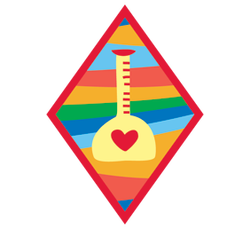


Two thumbs up for the Girl Scouts for fostering the emotional wellbeing of young women. Girls can earn a variety of badges, patches, and charms for engaging in activities that encourage knowledge, skill development, self-exploration, and healthy choices, all of which can positively impact emotional health. In the fall of 2011, they introduced the Science of Happiness badge. To earn this badge, girls develop and enact a plan to increase their happiness over the course of a month, using scientifically proven techniques. The badge is designed to be earned at the Cadette level, by 11 to 14 year old girls. This may be the perfect time for girls to learn these skills. By 11, most girls have the cognitive capacity to understand the scientific method, and learning how they can influence their own happiness by 14 may help reduce girls' development of depression, the incidence of which increases dramatically in adolescence.
The criteria for this badge were developed with the help of Dr. Martin Seligman of the University of Pennsylvania. Dr. Seligman is a prominent psychologist and a leader in the field of positive psychology. His original work focused on the impact of learned helplessness on depression. In his original studies, he found that some of his subjects (dogs) did not learn to be helpless. These results led him to explore the science of optimism and happiness. To learn more about the science of happiness and complete questionnaires to evaluate your own wellbeing, check out the Authentic Happiness and Pursuit of Happiness websites.