

BLOG
Psychology Tip of the Week #2: Face a Fear
I have a confession to make. I feel anxious every time I post or send out a newsletter.

After deciding to give your inboxes a little break , I’m back with psychology tip of the week #2. Turns out there was some kind of technical glitch that resulted in tip #1 being sent out 5 times in a week. Yikes! Here’s hoping the glitch has been fixed! In the spirit of making the most of what life brings, this week’s tip was inspired by the that glitch.
I have a confession to make. I feel anxious every time I post or send out a newsletter. I worry that I might inadvertently say something that would put people off or that I’m bugging people, and whenever someone unsubscribes, it can seem like proof that those worries are true.
Enter Psychology Tip of the Week #2: Face your fears. Avoidance increases anxiety while facing fears decreases them. I feel a little less anxious each time I send out a new post. The more regularly I post, the better. The longer I wait, the more the anxiety creeps back in. That glitch forced me to face my anxiety about bugging people head-on and my worst-case fears did not come true. This week, challenge your worry thoughts by facing something you feel anxious about.
For more information on anxiety treatment, click here.

Psychology Tip of the Week: "What-ifs"
Our minds are more powerful than most of us give them credit for. One of the most amazing things about our minds is how our thoughts can not only influence our feelings and interactions with the world, but physically change the structure of our brains!

Our minds are more powerful than most of us give them credit for. One of the most amazing things about our minds is how our thoughts can not only influence our feelings and interactions with the world, but physically change the structure of our brains! Even seemingly small shifts in the way we think or act can lead to significant improvement in our wellbeing and satisfaction with life. Introducing “Psychology tip of the week.” Each tip is designed to give you something small to work on to improve your quality of life. I encourage you to treat each one as an experiment—try it out for a week and see how it feels, then continue using the ones that work best for you.
Tip 1: “What ifs” cause anxiety that can rob today of its joy over fear of something potentially bad (that may or may not actually happen) in the future. In some cases, this fear feels worse than it would feel if the “bad” thing actually happened. This week, try focusing on “what is” instead of “what if…?”
For more information on anxiety treatment, click here.
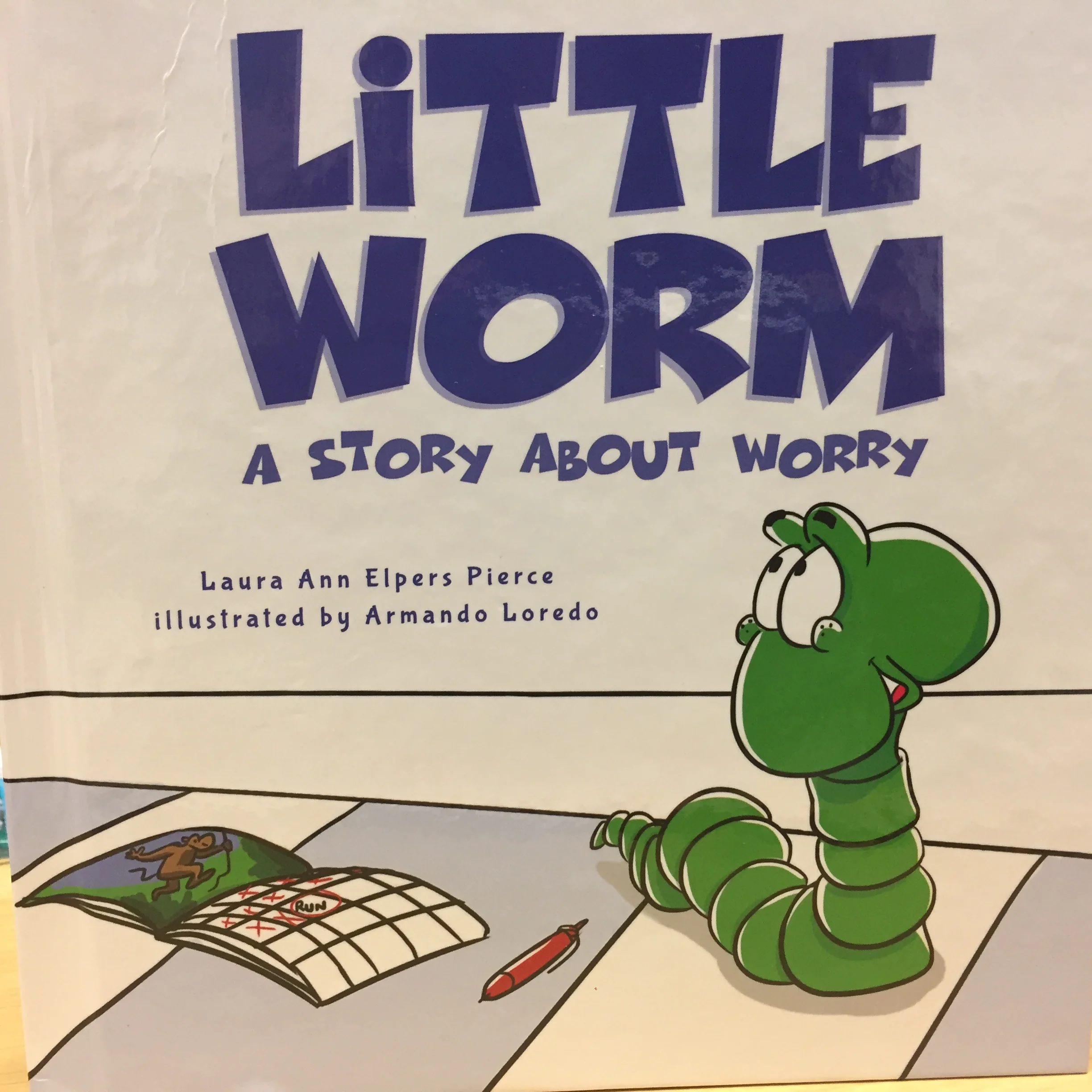
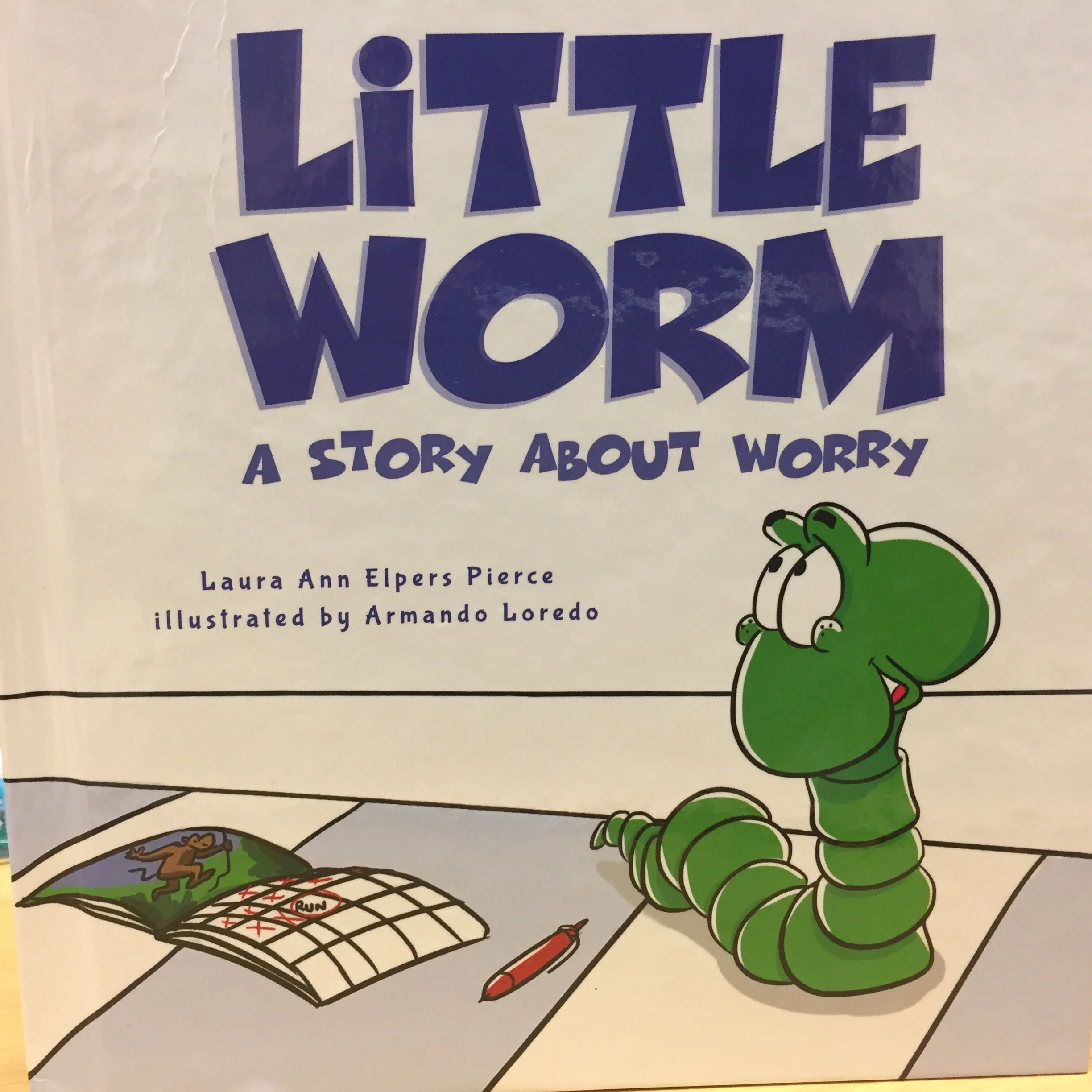
Book Review: Little Worm--A Story About Worry
Many of the children I work with in my practice struggle with anxiety, so when I was asked to review Little Worm—A Story About Worry I jumped at the chance.
Many of the children I work with in my practice struggle with anxiety, so when I was asked to review Little Worm—A Story About Worry I jumped at the chance. I often incorporate books in my practice, either by reading them in-session or recommending them for families to use at home. Reading a story about a character they relate to can encourage children to open up and learn new skills far better than simply asking questions or providing instruction.
Little Worm is a story about a young worm whose carefully laid plans are thwarted by rain. When he realizes things are not going as planned, he gets so worried he feels sick. He uses some simple coping strategies to manage his anxiety and makes a new plan, which helps him feel better.
The first thing I did when I received this book was to read it to my almost four-year-old son. He liked it so much he asked me to read it a second time that night, asked for it again the following night, and wanted to use it as his book for the school book exchange so his friends could read it.
Next, I brought the book to work, where I read it with some of my young patients. All of the children were drawn in by the bright, colorful pictures and rhyming prose, and seemed to enjoy the story, and some of them opened up more than usual about their anxious symptoms and concerns after reading this book. The children who opened up the most were ones who could relate to Little Worm more, specifically children who experience physical symptoms in response to anxiety and children who have difficulty dealing with changes of plan.
The publishers suggest that Little Worm is appropriate for children ages 3 to 7. Depending on your child’s maturity level, I would recommend it more for the younger side of this age range. For younger children who complain of feeling sick when they’re worried or those who have trouble handling it when things don’t go the way they expect, this book can be a good conversation starter to discuss their experiences and to introduce some basic coping skills.
For more information on anxiety treatment, click here.
For more information on child counseling, click here.
Coping with the emotions of Harvey—practicing what I preach
Few things are more stressful than natural disasters. They are unpredictable, often happen with little notice or time for preparation, and feel completely out of our control. For this reason, I often use the “hurricane example” when teaching stress management techniques—particularly the importance of differentiating what you can and cannot control, making a plan to control what you can, and coping with the emotions of what you can’t.
From the moment I first heard Hurricane Harvey was headed toward the Texas coast and could hit Houston until now, it has been an exercise in practicing what I preach. Through the anticipation, storm, and aftermath, I’ve used the tools I teach in my practice to keep myself (mostly!) sane.
Stress Management—controlling what I could
Few things are more stressful than natural disasters. They are unpredictable, often happen with little notice or time for preparation, and feel completely out of our control. For this reason, I often use the “hurricane example” when teaching stress management techniques—particularly the importance of differentiating what you can and cannot control, making a plan to control what you can, and coping with the emotions of what you can’t.
This has been, and will be, a continual process. When we first received news of the storm, my husband and I controlled what we could by stocking up on supplies and filling our gas tanks immediately, as well as making sure others were aware of the storm so they could prepare however they chose to. Like many others in Houston and the surrounding areas, we believed ourselves to be in a safe area, so we chose to stay home and not clog the roads for others who needed to evacuate. Despite our belief that we were unlikely to flood, the intensity of the storm was concerning, so we continually monitored the forecast and our property. When the news came that our neighborhood was likely to flood, we moved as much as we could to higher ground and evacuated our family to a safer area. When the rain subsided, we continued to control what we could despite having been flooded with about 4 inches of rain in our house. We minimized the damage by clearing the house of flooded materials as soon as it was safe to do so, asking for help, sharing our feelings, filing claims quickly, etc.
Emotion Regulation—coping with the emotions of what I can’t control
The city of Houston and the surrounding areas are still reeling from the impact of Harvey, much of which was out of our control. Even if your property was not damaged, you are likely experiencing a lot of strong emotions related to the storm, and it can be hard to know how to cope with them. There are several things I’ve found helpful through this process.
Downtime and Self Care
Between checking weather forecasts and taking actions to try to reduce the risk of flooding in our house, we did our best to get some downtime and take care of ourselves by watching our favorite TV shows, playing games, playing with our son, and making sure to eat and sleep.
Mindfulness
At its most basic level, mindfulness involves being present in the current moment without judgment. I’ll admit, this has been tricky for me. For several days I was obsessed with my neighborhood Facebook group as a source of information about my house and accessing help. I was mindful that this was bordering on obsessing rather than controlling what I could or getting social support, which sometimes helped me to move away from it and engage in other activities, but sometimes not for long. I was aware that I wasn’t always fully present during conversations or when playing with my son and would try to bring myself back to the present moment. I tried not to judge myself for getting distracted. Even being aware that you’re getting distracted and redirecting yourself to the present without getting upset about it is a form of being mindful.
Acknowledging and Accepting my emotions
I’m heartbroken for my city and its people. I’m sad for myself and my neighbors. I’m scared something will happen again before we’ve recovered. I could go on, but I won’t. The point is that I am willing to acknowledge these feelings and to allow myself to feel them. I give myself permission to feel sad, scared, etc. and see it as a sign of my humanity and not as a problem, as long as these emotions don’t keep me from functioning. Sometimes I let myself cry, but not all the time.
My goal in coping with my emotions is not to get rid of them, but to keep them at a manageable level. If I felt too happy and at ease during this time I might not do the things I need to do for my family or for others in need. By acknowledging, accepting, and experiencing my emotions, I can use them as information to motivate me to action and see them as a sign of empathy and compassion for myself as well as others.
Getting Social Support and Accepting Help
Keeping friends and family updated, and getting updates from them, has been a way to control what I can as well as get support for dealing with this difficult time. I rarely post on social media, but have found it a helpful and convenient way to keep friends and family updated on our status as well as to get emotional support—it helps to see that people care.
I’ve discovered that our neighborhood has a Facebook group and have started connecting with people on there. This group has been great for accessing help and practical support, and I hope that I will get closer to others in my community through this process. So many people have come out to help with the cleanup process, both through neighborhood support and other groups, it has been truly amazing. I’d be lost if it weren’t for the practical help we’ve gotten.
Perspective and Finding Things to be Thankful for

As hard as this has been, I’ve found many things to be thankful for. While many people weathered Harvey better than my family, many also fared worse. After hearing my house was predicted to get about 5 feet of water, I was relieved to find out it got much less. It’s a matter of perspective, and I’m thankful things aren’t worse, because they could be, and for some people they are. But even for those people, there are things to be thankful for. No doubt there have been losses—many of them—but most of us are still alive. The rain has stopped for now. The water is receding in many areas. The way the city has come together to help those in need and the outpouring of generosity and compassion has been heart-warming. For these things, and many more, I’m thankful, and that helps keep me from getting too bogged down with the sadness and loss.
The road to recovery for the Houston area will be long, and the process of coping with the emotions will be an ongoing one. I will continue to use these steps to cope with the loss, and see the beauty that has accompanied this tragedy. If you practice some of these things, I know you can too. If I can be of any help, whether it’s advice, to talk through loss, or just someone to hear your thoughts please don’t hesitate to reach out. In some way we are all sharing in this loss, and it is important to talk about it.
For information on anxiety treatment, click here.
Are you an anxious parent?
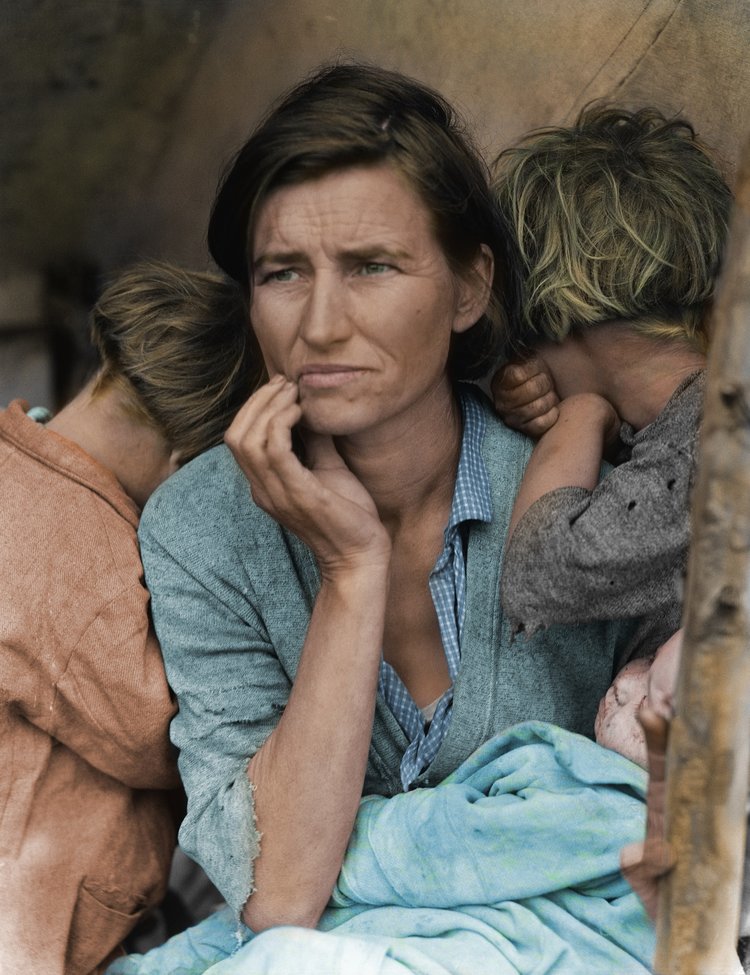
Are you and anxious parent? I know what it’s like to lay awake at night worrying. Do you? Worrying about whether you’re doing the right thing for your kids or doing enough for your kids. You might be worrying about your child’s future and how they will be able to make it in this world, or how they will be judged by others.
Are you an anxious parent?
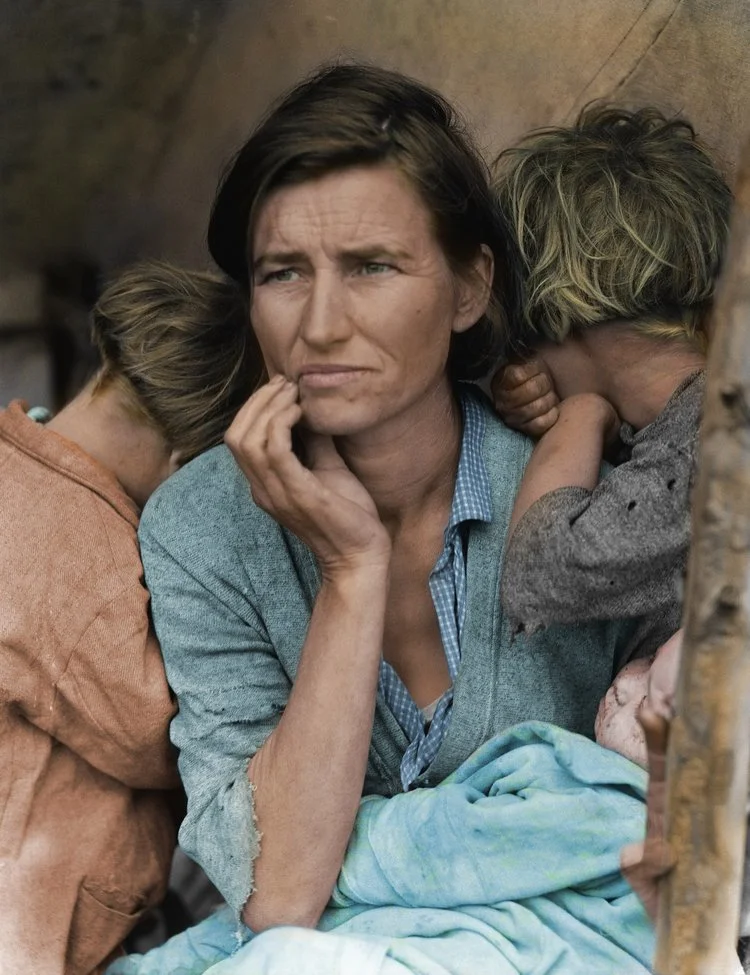
Are you and anxious parent? I know what it’s like to lay awake at night worrying. Do you? Worrying about whether you’re doing the right thing for your kids or doing enough for your kids. You might be worrying about your child’s future and how they will be able to make it in this world, or how they will be judged by others. Maybe you worry about their safety, especially as they get older. If this sounds like you, you’re probably trying to do everything in your power to alleviate this anxiety and to make sure your children are happy, healthy, and safe. Anxiety comes in all different forms, and can show itself in many different ways. Maybe you have struggled with anxiety for a long time, even before having children. Maybe you never considered yourself to be anxious until you had kids and you started to feel like you had less control of the world. Maybe you still don’t think of yourself as anxious, but when things don’t go the way you think they should, it’s very difficult to handle.
I see a lot of parents, and their anxiety often becomes apparent even when they are not aware of a family history of anxiety. It can be easy to try to control your fears by controlling your environment and your child’s. And sometimes, maybe even most of the time, this approach can seem to work for alleviating parental anxiety, but it may increase children’s. Anxious parents often have anxious children, but it doesn’t have to be that way.
My intention is not to blame parents. If I’ve described you here, your reactions are only natural. My goal is to give you hope and provide a path forward for alleviating your own anxiety as well as your children’s.
Anxiety is treatable. The challenge is that treating anxiety can seem counter-intuitive. Anxiety comes from overestimating the danger in a situation, and treating it involves not only recognizing the false-alarm, but also treating it as a false alarm. In the case of your children, this means allowing them to experience difficult situations and make choices you don’t always agree with, and recognizing the limits of your control. When it comes to our children, it can be harder to recognize the false alarm. The solution can feel unnatural and scary, especially at first.
When I work with anxious children, a major component of my work is often helping parents learn how to respond to their child’s anxiety. Sometimes I work just with parents and send them home with new skills to use for managing their own stress and responding to their children.
New research has shown that with family therapy it may even be possible to prevent or delay the onset of anxiety disorders in children with anxious parents (click here for more on this research: http://n.pr/1KzNgqE).
If you'd like to see how addressing your own anxiety can impact your family, call to schedule an appointment. For more information on anxiety treatment, click here.

Life is like...a bowl of beets?
Ok, I know a bowl of beets isn't as appetizing as a box of chocolates, but bear with me here. The other day I had beets that someone had given me that I wanted to use before they went bad. So I found a recipe and spent a good 30 minutes preparing this beet dish. Now I should mention that I have a long-standing mental-block against beets.
Life is like...a bowl of beets?
Ok, I know a bowl of beets isn't as appetizing as a box of chocolates, but bear with me here. The other day I had beets that someone had given me that I wanted to use before they went bad. So I found a recipe and spent a good 30 minutes preparing this beet dish. Now I should mention that I have a long-standing mental-block against beets.I know that I usually wind up liking dishes with beets when they're prepared by someone else and put in front of me. And yet, as a rule, I don't seek them out, and really hesitate before eating them. Other than one unfortunate incident involving juicing beets (which really didn't help my mental-block), I have never prepared them myself. But I don't like wasting food and I'm trying to eat more vegetables, so I found myself standing in front of a dish of beets that I had just spent half an hour preparing and I did. not. want. to. taste. them. "It's late," I reasoned, "Maybe I'll wait until tomorrow." As I stood in my kitchen trying to decide what to do, I noticed that my heart was pounding hard and fast. "Huh, I'm feeling kind of anxious. I wonder why?" I thought. And then I realized...I was afraid of the beets. I know this is not a rational fear. I know that I am usually surprised to find that I do like beet dishes almost every time I eat them. I know that the worst thing that is likely to happen is that I will not like the dish I just prepared, and it will be a waste of food and my time (which is more or less the same outcome as if I do not try it). But knowing these things was not enough to alleviate my anxiety.
The more I considered avoiding the source of my anxiety, the more my fear of eating beets grew. Determined not to be beaten by fear of a vegetable, I prepared myself a large bowl of bright red salad and took a bite. My heart immediately stopped pounding and I felt calm. I felt better and better with each bite. I felt a little silly that I had made eating beets into such a big thing, but also good that I was able to face my fear and confident that I could do it again. And I did...twice more that week. I know that the more often I eat beets, the better I will continue to feel about it. If I go a long time without eating them, I may feel apprehensive again in the future and have to follow these steps again: Recognize my feeling (anxiety), identify the source (the idea of eating beets), use logic and challenge the anxiety producing thoughts (I've eaten beets before and liked them. The worst thing that's likely to happen is an unpleasant bite of food), and face the fear (taste the beets).
This is exactly the type of thing I help clients to do. We look at the things that are causing them anxiety or discomfort and examine whether their response to these situations is helping them feel better or inadvertently making them feel worse. I then help them learn strategies for coping with their emotions and approaching the situations in a new way and evaluate the results. Not all fears or anxieties seem as innocuous as tasting beets, but with the right skills, you can overcome even bigger fears and stop letting anxiety get in your way.
For information on anxiety treatment, click here.

Anxiety in Youth
It seems that today’s children are experiencing problems with anxiety much more than children in the past. Anxiety can zap the joy from childhood and set children up for continued emotional difficulty in the future.
Anxiety in Youth
It seems that today’s children are experiencing problems with anxiety much more than children in the past. Anxiety can zap the joy from childhood and set children up for continued emotional difficulty in the future. Signs of anxiety in children can include:
Insistence on perfection
Avoidance of feared situations
Seeking Excessive Reassurance
Repetitive Behaviors
Excessive Checking
Difficulty with Decisions
Frequent Somatic Complaints
Easily Overwhelmed
Sensitive to Criticism
Irritability
Uncontrollable fears, worry, or “what if’s”
Difficulty sleeping
Difficulty focusing in high-stress situations (mind “going blank”)
Shutting down or melting down in the face of perceived pressure
Children can experience the same anxiety disorders as adults, but they may not always recognize the feeling of being worried or anxious. Some children may deny these feelings when they do recognize them. Children can, however, still benefit from therapeutic interventions.
Cognitive-behavioral therapy (CBT) is the preferred treatment for anxiety in children. CBT techniques that may be used include:
Learning relaxation skills
Positive self-talk
Problem-solving skills
Compartmentalizing worry
Re-evaluating thoughts
-AND ULTIMATELY-
FACING FEARS
Protecting children from their fears and continually reassuring them will only serve to strengthen their anxiety, but they should not be forced into feared situations without the proper tools. With help learning the right skills, children can learn to manage anxiety and enjoy their youth!
For more information on anxiety treatment, click here.

Mental Health vs. Mental Illness
I've never met a single person who could not benefit from the knowledge of a psychologist at some point. Does that mean I think everyone is mentally ill? Not even close. Does it mean I think everyone needs to see a psychologist? Not necessarily.
Mental Health vs. Mental Illness
I've never met a single person who could not benefit from the knowledge of a psychologist at some point. Does that mean I think everyone is mentally ill? Not even close. Does it mean I think everyone needs to see a psychologist? Not necessarily. (It also doesn't mean I analyze everyone I meet!) What it does mean is this: psychology applies to everyone, and the distinction between mental health and mental illness is not always clear-cut.
While we've all grown to accept varying degrees of physical health, people often think of mental health as an either-or situation; either you're mentally healthy, or you're mentally ill (and if you're seeking help, you're "crazy"). Not so! Mental health, like physical health, exists on a continuum. Psychological knowledge can help with all points on the continuum, from prevention to treatment and relapse prevention.
Some physical and mental health concerns are relatively minor and may clear on their own; some are more serious, but generally respond to treatment; and some are chronic and need ongoing care. Some need medication to be treated, while some can be treated without medication. Some can be treated with either medication or lifestyle changes, and some respond best to a combination of medication and lifestyle changes.
Biology and genetics play a role in the development of both mental and physical difficulties, but so does your environment. You don't have to be "sick" to get help or learn to take care of yourself mentally or physically. As they say, sometimes an ounce of prevention is worth a pound of cure! Even with minor problems, learning effective ways to deal with them now can help reduce the chances of them becoming problems again in the future or developing into something more severe. That goes for children as well as adults.
There's a lot of information (and misinformation) out there to help people learn to manage their mental and physical health on there own. There are many great resources (some of which I will periodically review on this blog) for learning new skills to increase your mental health at home. These resources have many advantages: they're cost-effective, they're even more private than therapy, and they can be done at your convenience. I highly recommend them, but sometimes they're not enough.
One distinction that still remains between mental and physical health is the stigma. Once upon a time, people only went to doctors when they were sick. Once upon a time cancer was something people were ashamed of. We understand our bodies better now. We can accept that it's not always possible to stay healthy, no matter how hard we try, and that it's nothing to be ashamed of. Why not give our mental and emotional health the same consideration when the mental and physical are so closely connected?
At some point, we all experience mental and physical health challenges. They may be relatively minor. They may clear on their own. Or they may be more serious. But seeking help for them does not mean you've given in to being sick; it means you want to figure out how to be the healthiest you you can be! Why struggle when there's help available?
[youtube=http://www.youtube.com/watch?v=J5qWP-EMSRQ]

Psychology Tip of the Day: Learn to Identify Tension
Because many of us are so used to carrying around tension, it can be difficult to recognize when our muscles are tense.
Because many of us are so used to carrying around tension, it can be difficult to recognize when our muscles are tense. Even when we scan our bodies for tension, we may overlook it because it feels "normal." In order to increase your awareness of tension, you have to learn to recognize it. Try intentionally tensing a muscle for 5-7 seconds and then quickly releasing the tension while paying close attention to the sensations of tension and then relaxation. Relax each muscle for about 30 seconds. (This is best done lying down so you don't have to rely on your muscles to support your posture). By doing this with each of our muscle groups, we can learn to more easily identify and release unnecessary tension throughout the day.
Not sure how to tense a certain muscle group? Check out this chart.
For information on anxiety treatment, click here.

Psychology Tip of the Day: Increase Relaxation
Try combining deep breathing with the intentional release of muscle tension to increase relaxation and further reduce tension.
For information on anxiety treatment, click here.